About Us

INTERCROSSING – THE MOST POWERFUL PRINCIPLE OF THE UNIVERSE (Laza Kostić)
It may have seemed strange to many that it was precisely a pianist, Marina Milić, who in 1991, while pursuing advanced piano studies in London, created a foundation bearing the name of the Serbian poet Laza Kostić. In Marina Milić’s opinion, through “the Serbian Shakespeare” (as Laza Kostić was called when he, in 1864, on the 300th anniversary of the Bard’s birth, grandly introduced the Great Will to Novi Sad), Serbia could be best and most powerfully represented in the way it truly deserved—through his character and work.
Thanks to the “Laza Kostić” Foundation, artists, scientists, and athletes of global renown have helped promote and nurture Serbian culture—not only in London and cities across the United Kingdom, but also in Serbia—through the legacy of Laza Kostić and the values he stood for.
The programmes organised by the Foundation have featured some of the most distinguished names in their respective fields: composer Sir John Tavener, sopranos Patricia Rozario and Radoslava Vorgić Žuržovan, pianists Piers Lane and Julius Drake, Serbian flutе player Bora Dugić, literary academicians such as Dejan Medaković and Matija Bećković, translators Kolja Mićević and academician Zoran Paunović, Professor Dr Miodrag Radović, Professor Dr Zorica Bečanović Nikolić, Professor Dr Miloš Kovačević, directors Bora Drašković, Nikita Milivojević, Boris Liješević, Dr Branimir Jovanović, graphic designer Atila Kapitanj, actors and actresses Mira Banjac, Svetlana Bojković, Vojin Ćetković, Hadži Nenad Maričić, ballet dancer Konstantin Kostjukov, athletes Vlade Divac, Anto Vasović, Željko Rebrača, and many others.


SERIES OF INTERCROSSINGS
From its very founding in London to the present day, the Foundation nurtures values and engages in activities that illuminate and represent the image of the poet Laza Kostić. Applying Kostić’s principle of intercrossing in practice, and continuing Laza’s dedication to the youth, the Foundation’s scientific conferences, festivals, concerts, celebrations, and workshops almost always bring together top experts and the youngest participants. Intercrossing is the hallmark that makes the Foundation unique. Celebrations such as St. Three Hierarchs (12 February, the poet’s birthday and the Foundation’s patron saint day) and St. John of Shanghai (2 July, patron of the Foundation’s youth wing), Scientists in the Limbo of Oblivion at the Ilija M. Kolarac Foundation, To Kostić Laza on a Starry Path (a festival in Sombor dedicated to the poet and in memory of his noble wife Julijana, née Palačanka), the projects Laza and Will, Beephenomena—concert lectures with workshops—are all proof of intercrossing in action.
Kostić devoted himself to Shakespeare for 50 years, to sport for 60 years, and to his faith persistently, from early childhood until his death—for nearly 70 years. These facts are reflected and interwoven like threads through the Foundation’s activities over more than three decades of its existence.
Just like the poet himself, a liturgical Christian after whom it is named, the Foundation holds memorials, and its priests bless wheat and the ceremonial bread for feast days. The Church of St. Sava in London, the Monastery of the Holy Archangels Michael and Gabriel in Kovilj, the Church of the Ascension in Žarkovo, the Cathedral Church of St. George in Sombor, and the Church of St. Nicholas in Sremski Karlovci are places where lectures and gatherings have been held. Bishop Porfirije (now the Serbian Patriarch), Archpriest-Stavrophor Milun Kostić, Archpriest-Stavrophor Miloš Vesin, Presbyter Dr Oliver Subotić, and Archpriest- Stavrophor Jovan Milanović have over the years enriched the Foundation’s programmes and actively participated in the spiritual upliftment of younger generations.
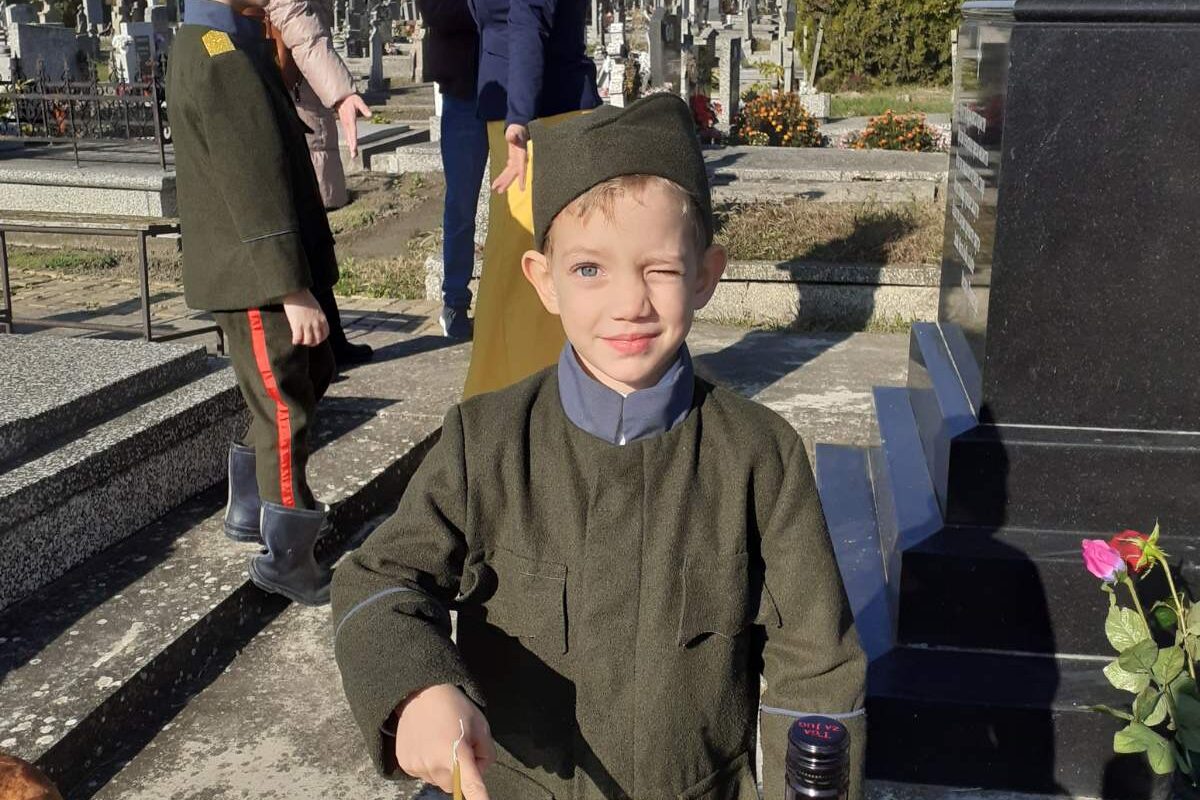
On 2 July 2012, the Foundation established a youth section called Laza’s Ambassadors. The name was inspired by the Globe Ambassadors, chosen and trained by Shakespeare’s Globe Theatre to work on various projects and to bring young people closer to art and culture. Since 2 July is the feast day of St. John of Shanghai, protector of the young, truth, and justice, His Holiness, the late Patriarch Irinej, gave his blessing for this saint to be taken as the patron of our youth, with Presbyter Dr Oliver Subotić appointed as their spiritual guide.
The most prestigious cultural institutions have supported the Foundation’s programmes for over three decades: the British Library, Wigmore Hall, Globe Theatre, St John’s Smith Square, Steinway Hall, Putney Rowing Club in London, the Shakespeare Institute in Stratford, the Serbian Academy of Sciences and Arts, Matica Srpska, the Serbian National Theatre in Novi Sad, Ilija M. Kolarac Foundation, the National Theatre and Vuk’s Foundation in Belgrade, the National Theatre in Sombor, the City Library in Novi Sad, Prometej Publishing, the Olympic Museum, the Tesla Museum in Belgrade… Our vision has also been recognised and supported by the Government of the Republic of Serbia, the Serbian Orthodox Church, the Autonomous Province of Vojvodina, the City of Novi Sad, Their Royal Highnesses Alexander and Katarina Karađorđević, Princess Jelisaveta Karađorđević, as well as associations such as: D’Oyly Carte Foundation, the Tesla Foundation in Philadelphia, Norwich–Novi Sad Association, the Karić Foundation, and others.
Fostering a love for classical music, painting, literature—especially Shakespeare—, theatre, nurturing refined oratory, nobility, and traditional values of our people have been many of the golden threads interwoven through our work over the past decades. We run marathons, encourage sport and journalism. We dedicate ourselves to children and youth with equal care and depth as we do to engaging and inspiring the participation of top artists and distinguished scientists in our activities.
Because that is what Laza — our inspiration and role model — did.